

Written by
Vadim Kotin
Published on
Oct 20, 2026
Read time
7 minute read
Local Services Ads Are Moving Into Google Performance Max: What Local Businesses Need to Know
Google Ads Update | October 2026
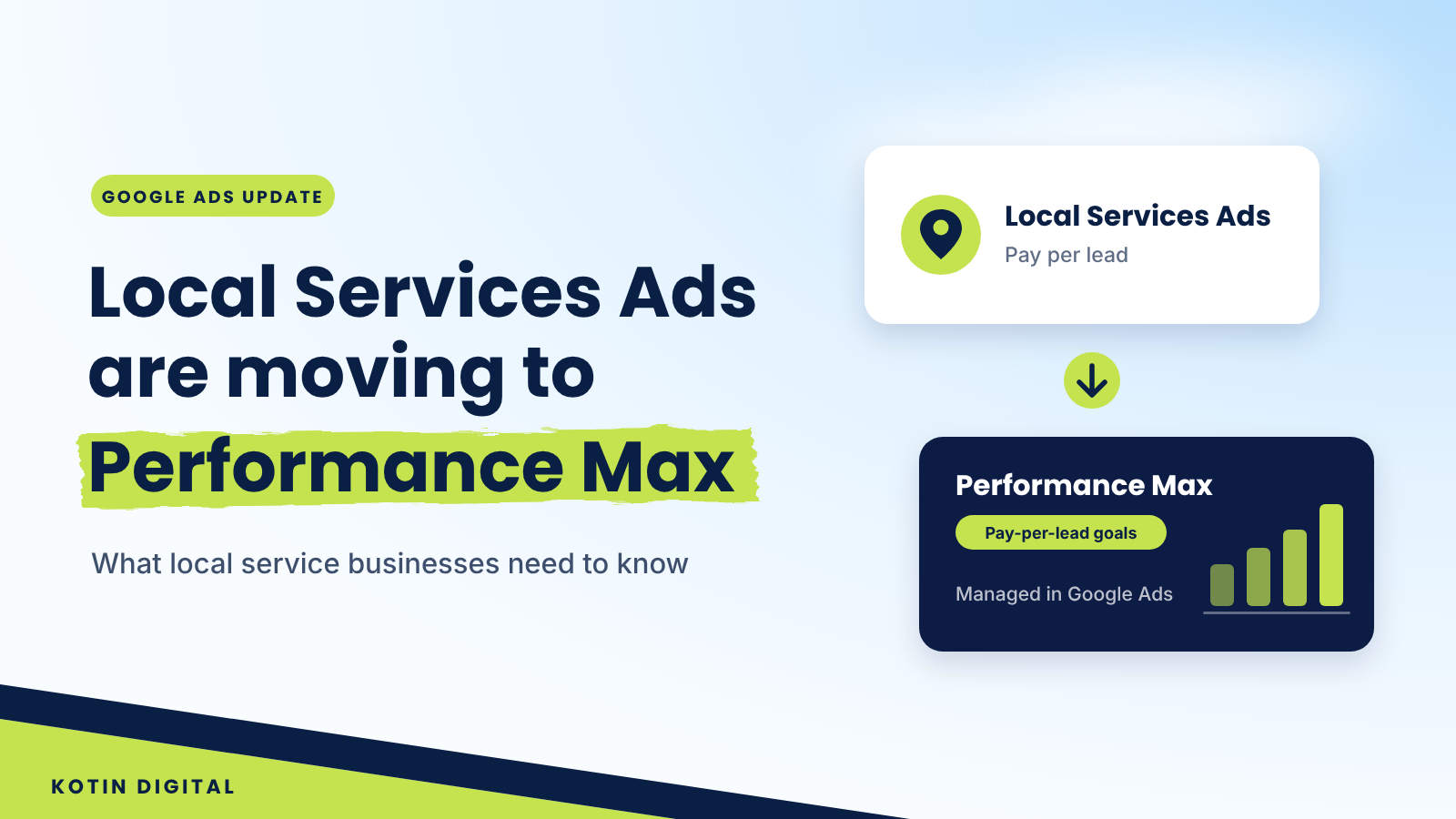
Google is changing how businesses manage Local Services Ads (LSAs), bringing them into the Google Ads platform through a specialized campaign type called
Performance Max with pay-per-lead goals.
For local service businesses, including roofing contractors, plumbers, HVAC companies, electricians, and other home service providers, this is an important change to understand. While the advertising experience is moving to a new platform, the core pay-per-lead model and familiar ad placements are designed to remain in place.
Google began rolling out the transition to selected US advertisers in August 2026, with additional groups and international markets scheduled to follow in phases.
Canadian businesses, including those in Vancouver and across British Columbia, the transition is expected to extend into 2027.
So, what exactly is changing, and what should your business do to prepare?
What Are Google Local Services Ads?
Local Services Ads are designed to connect customers with local businesses when they search Google for services they need.
For example, when someone searches for a roofing company in Vancouver, Local Services Ads may appear prominently at the top of the search results, above many traditional Google Search Ads and organic listings.
These ads can display key business information, such as your company name, customer reviews, service categories, and contact options. Eligible businesses may also display the Google Verified badge associated with the Local Services Ads program.
One of the biggest advantages of LSAs is their pay-per-lead pricing model. Rather than paying for every ad click, businesses are charged for eligible customer contacts generated through the ads.
For service businesses looking to generate phone calls and qualified inquiries, this can make LSAs an attractive part of a local lead generation strategy.
What Is Changing With Local Services Ads?
Google is transitioning Local Services Ads into a specialized version of Performance Max within Google Ads. This is not simply a move to standard Performance Max campaigns; the new campaign type is specifically designed around pay-per-lead advertising.
Here are the main changes businesses should understand.
1. Local Services Ads Will Be Managed Inside Google Ads
Previously, advertisers managed their Local Services Ads through a separate dashboard.
After migration, businesses will manage their campaigns through Google Ads, bringing more of their Google advertising activities into one platform.
This includes managing budgets, adjusting service categories and locations, accessing lead information, and updating certain campaign settings.
Why it matters: Businesses running both Local Services Ads and traditional Google Search campaigns may find it easier to manage their advertising in one place. However, the new interface will require advertisers to become familiar with the updated campaign settings and reporting.
2. The Pay-Per-Lead Model Will Remain
One of the most important details is that Google is retaining the pay-per-lead model for these specialized Performance Max campaigns.
Businesses will continue to pay for eligible leads, such as qualifying phone calls and messages, rather than ordinary ad clicks.
This distinguishes Performance Max campaigns with pay-per-lead goals from standard Performance Max campaigns, which generally use different conversion-based bidding and billing arrangements.
For local service companies, the focus remains on generating customer inquiries rather than simply driving website traffic.
3. Ads Will Continue to Appear on Google Search and Google Maps
According to Google, migrated Local Services Ads will continue to appear on Google Search and Google Maps in the same ad positions as before.
The transition does not mean that these ads will automatically expand across the Display Network, YouTube, or other placements commonly associated with standard Performance Max campaigns.
This distinction is important for advertisers who want to understand where their marketing budget is being spent.
The new campaign type is intended to preserve the existing Local Services Ads experience while bringing campaign management into Google Ads.
4. Keywordless Targeting Will Continue
Traditional Google Search campaigns allow advertisers to select keywords such as:
-
Roofing company Vancouver
-
Emergency plumber near me
-
HVAC repair Vancouver
-
Electrician in Burnaby
Local Services Ads operate differently. Advertisers select eligible service categories and geographic areas, and Google determines when to show their ads based on the campaign’s settings and its matching systems.
This approach will continue with Performance Max campaigns using pay-per-lead goals.
Businesses should therefore pay close attention to their selected services and service areas to help ensure their ads reach relevant potential customers.
5. Budgeting and Bidding Settings Will Change
The migration also introduces changes to budget and bidding management.
Google has indicated that weekly Local Services Ads budgets will be converted into equivalent average daily budgets. The monthly spending limit will continue to be based on the average daily budget multiplied by 30.4.
Manual bidding and industry-level Target CPA settings will no longer be supported after migration. Where advertisers previously used different target costs per lead for separate service categories within one campaign, they may need to review their campaign structure and bidding strategy.
For businesses offering multiple services, this is an important consideration.
For example, a roofing contractor that provides roof repairs, roof replacements, and commercial roofing services may want to evaluate whether separate campaigns are appropriate when different services have different lead costs, profit margins, or sales cycles.
Any restructuring should be based on actual campaign performance and Google’s available settings rather than assuming that separate campaigns will automatically produce better results.
How Will the Transition Affect Canadian Businesses?
The transition is being rolled out in phases, and availability depends on location, business category, and account eligibility.
Google’s published timeline indicates that selected US home and storefront service advertisers began transitioning in August 2026. The rollout is expanding to additional advertiser groups, while non-US accounts and remaining business categories are scheduled to transition during 2027.
For Canadian businesses, this means the change may not happen immediately.
Advertisers should monitor communications from Google and review the migration information available in their accounts. Do not assume that a US advertiser’s experience or timeline will apply to a Canadian business.
Businesses should also confirm whether their category and location are eligible for the new campaign type when the transition becomes available.
What Should Local Businesses Do to Prepare?
Although Google is handling the migration for existing campaigns, businesses can take several practical steps to prepare.
1. Save Your Historical Performance Reports
This is one of the most important preparation steps.
Google has stated that historical Local Services Ads performance reports will not automatically transfer into Google Ads.
Before migration, download or otherwise preserve the historical data you need for future comparisons. Depending on the information available in your account, this may include lead volume, cost per lead, call activity, service categories, and monthly spending.
Without historical data, it can be more difficult to determine whether performance has improved or declined following the transition.
2. Review Your Lead Quality
Not every inquiry becomes a paying customer.
Businesses should review how many leads turn into booked appointments, estimates, and completed jobs. Where possible, record the revenue and profit generated by those jobs.
For example, a roofing company might receive 40 leads in a month but close only eight projects. Understanding the relationship between lead cost, close rate, and project profitability provides a much clearer picture of campaign performance than lead volume alone.
This information can also help guide decisions about future budgets and service priorities.
3. Review Your Google Business Profile
Google uses information from your Google Business Profile to help populate and manage aspects of the new campaign experience.
Core business details, including the business name, address, and business hours, are synchronized from the profile into Google Ads.
Before migration, make sure your business information is accurate and consistent. Review your service offerings, operating hours, contact details, and other relevant information.
Keep your profile current as your business grows or changes its services.
4. Reassess Your Budget and Service Categories
Review how much you spend on Local Services Ads and which services generate the best business results.
If your business offers multiple services, consider whether the current structure still makes sense under the new bidding and budget settings.
For example, emergency plumbing calls and larger plumbing installation projects may have very different values. Roofing repairs and full roof replacements can also differ significantly in revenue, sales cycle, and profitability.
The objective should be to allocate your advertising budget based on the business outcomes you want to achieve, while accounting for the campaign options Google actually makes available.
5. Monitor Performance After Migration
Google advises allowing time for migrated campaigns to stabilize. Its guidance indicates that the migration process and performance ramp-up can take up to two weeks.
During this period, monitor lead volume, lead quality, spending, and customer response times. Avoid making unnecessary changes based on a few days of data.
Compare performance against your historical results and look for meaningful changes over a reasonable period.
If performance declines, investigate the underlying causes before increasing the budget or restructuring campaigns.
Will Local Services Ads Replace Traditional Google Search Ads?
No. The transition does not mean traditional Google Search Ads are being discontinued.
Local Services Ads and standard Search campaigns serve different purposes and offer different controls.
Local Services Ads focus on eligible customer contacts through a pay-per-lead model, using service categories and geographic targeting.
Traditional Search campaigns allow advertisers to target keywords, develop ad messaging, direct visitors to specific landing pages, and optimize toward a broader range of measurable conversions.
For many local service businesses, the two approaches can complement one another.
For example, a roofing contractor could use Local Services Ads to generate direct customer inquiries while running Google Search campaigns targeting high-intent searches such as roof replacement estimates, commercial roofing services, or specific roofing materials.
A coordinated strategy can help a business reach customers at different points in their decision-making process.
The right approach depends on the business’s service area, competition, budget, lead quality, and ability to convert inquiries into profitable jobs.
The Bigger Picture: Focus on Leads, Not Just Advertising Costs
The transition to Performance Max with pay-per-lead goals is part of Google’s broader effort to bring Google ads management into one platform.
For business owners, the most important question is not simply whether campaigns are managed in a different dashboard. It is whether advertising generates profitable customers.
A successful local lead generation strategy should measure more than impressions, clicks, or even the number of leads received.
It should also account for:
-
Cost per lead: How much does it cost to generate a customer inquiry?
-
Lead-to-sale conversion rate: What percentage of inquiries become paying customers?
-
Cost per acquired customer: How much advertising spend is required to win a new customer?
-
Revenue and profit: Are the customers generated by advertising profitable?
-
Response time: How quickly does your business respond to incoming calls and inquiries?
For example, a business generating leads at $100 each may appear to be performing well. But if only a small percentage of those leads become customers, its acquisition costs may be too high.
Another business might pay more per lead but close a greater percentage of inquiries and generate more profit from each project.
Understanding these metrics helps businesses make better decisions about their advertising budgets, campaign structure, and long-term growth.
Google’s transition of Local Services Ads into Performance Max campaigns with pay-per-lead goals represents an important change in how local advertising is managed.
The core benefits of Local Services Ads are expected to remain: eligible leads rather than ordinary clicks drive charges, ads continue to appear on Google Search and Google Maps, and targeting remains focused on service categories and geographic areas.
However, campaign management, reporting, and bidding settings are changing. Businesses should preserve their historical data, review their Google Business Profile, understand their lead economics, and monitor performance as their accounts transition.
For Canadian businesses, the key is to prepare for the rollout without making unnecessary changes before the new campaign type becomes available to their account.
At Kotin Digital, we help local service businesses build data-driven Google Ads and lead generation strategies designed to turn advertising spend into measurable business results. If you want to understand how these changes could affect your business, reviewing your current lead generation performance is a practical place to start.
Need help with your Google Ads strategy? Contact PPC Agency Kotin Digital to discuss how your business can prepare for Google’s evolving local advertising landscape.